Introduction
Food processing facilities operate in one of the world's most highly regulated industries. Even a minor pest infestation can lead to product contamination, regulatory action, failed audits, production downtime, customer complaints and significant financial losses.
This is why leading manufacturers implement Integrated Pest Management (IPM) rather than relying solely on reactive pest control. IPM shifts the focus from killing pests after they appear to preventing them from ever establishing — protecting products, people and certifications alike.
Integrated Pest Management is a preventive, science-based approach combining inspection, monitoring, sanitation, exclusion and targeted treatment. Read our full Integrated Pest Management overview.
Why Food Processing Facilities Are High Risk
Food environments provide everything pests need to thrive. The very conditions that keep production running also make facilities attractive to insects, rodents and birds:
- Raw materials arriving from multiple suppliers can carry hitchhiking pests.
- Moisture from washdowns, condensation and drains sustains pest populations.
- Warm temperatures around ovens, motors and equipment accelerate breeding.
- Waste and organic residues offer abundant food sources.
- Packaging and cardboard create harbourage and nesting material.
- Loading docks and shutter gaps are constant entry points.
- Employees and transport vehicles can inadvertently introduce pests.
Common Pest Challenges
The pests that most frequently threaten food manufacturing operations include:
- Cockroaches — carriers of harmful bacteria in kitchens and drains.
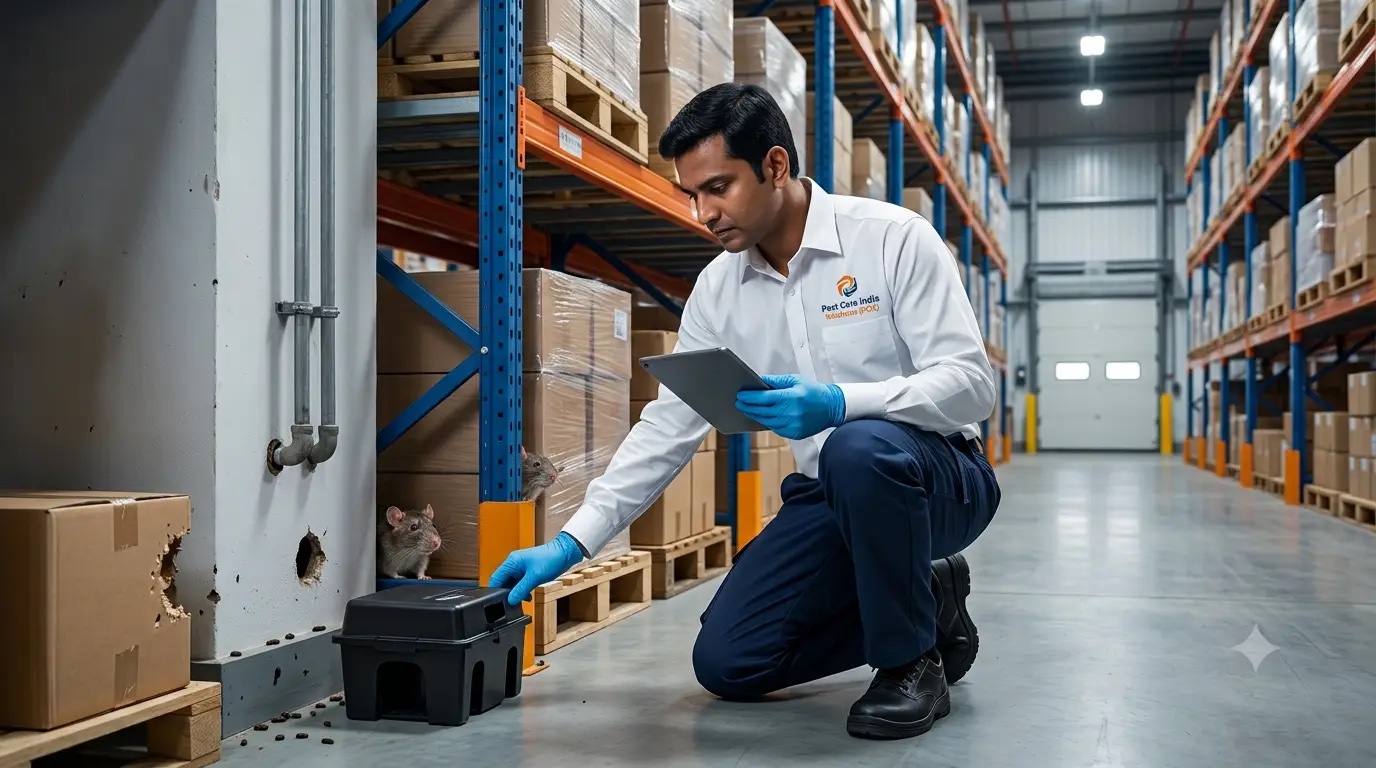
- Rodents — contaminate stock and gnaw through packaging and wiring.
- Stored product pests — infest grains, flour and dry ingredients from within.
- Flies — transfer pathogens directly onto exposed product.
- Ants — trail into production and storage areas.
- Birds — foul docks, roofs and open areas with droppings.
Critical Risk Areas
An effective programme prioritises the zones where contamination risk is highest. In most facilities these include:
- Receiving and raw material intake
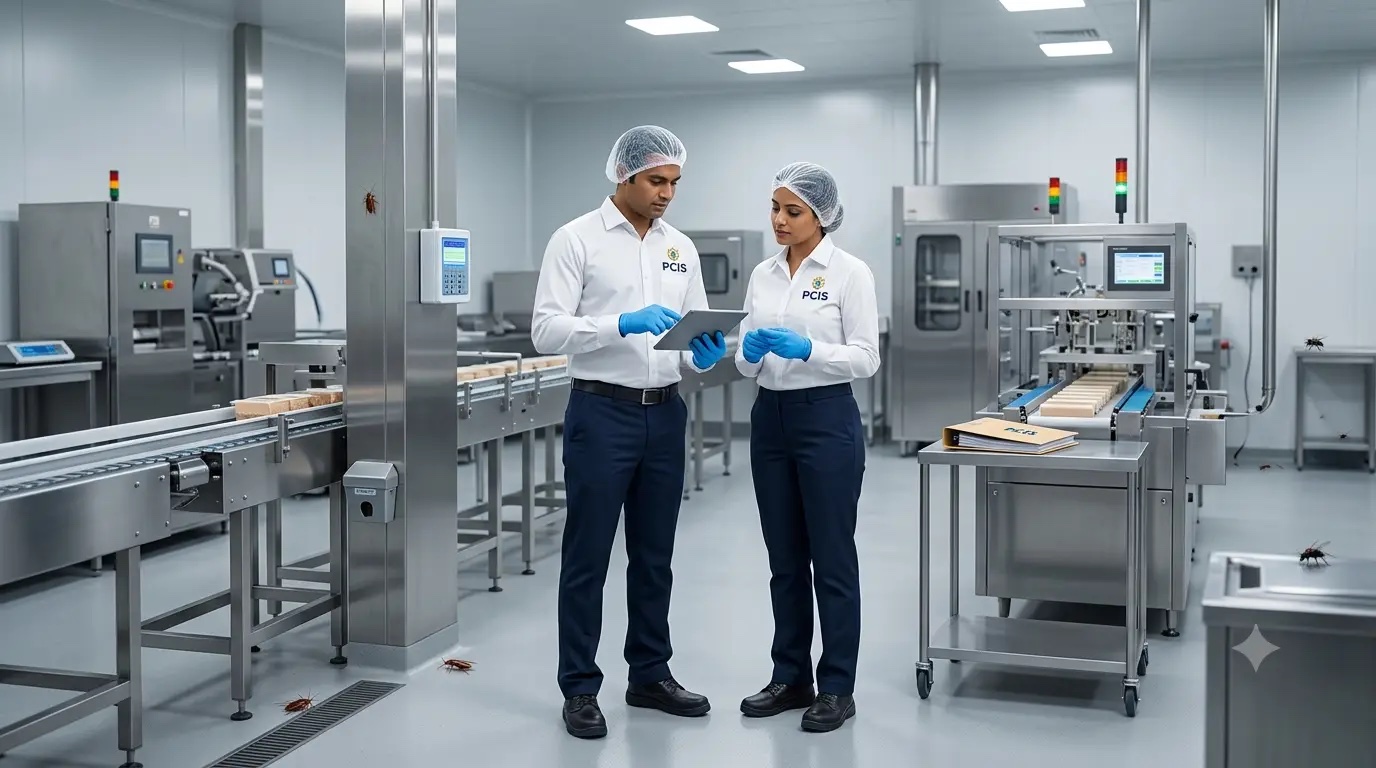
- Production and processing lines
- Warehouse and finished goods storage
- Drainage systems and waste areas
- Loading docks and external surroundings
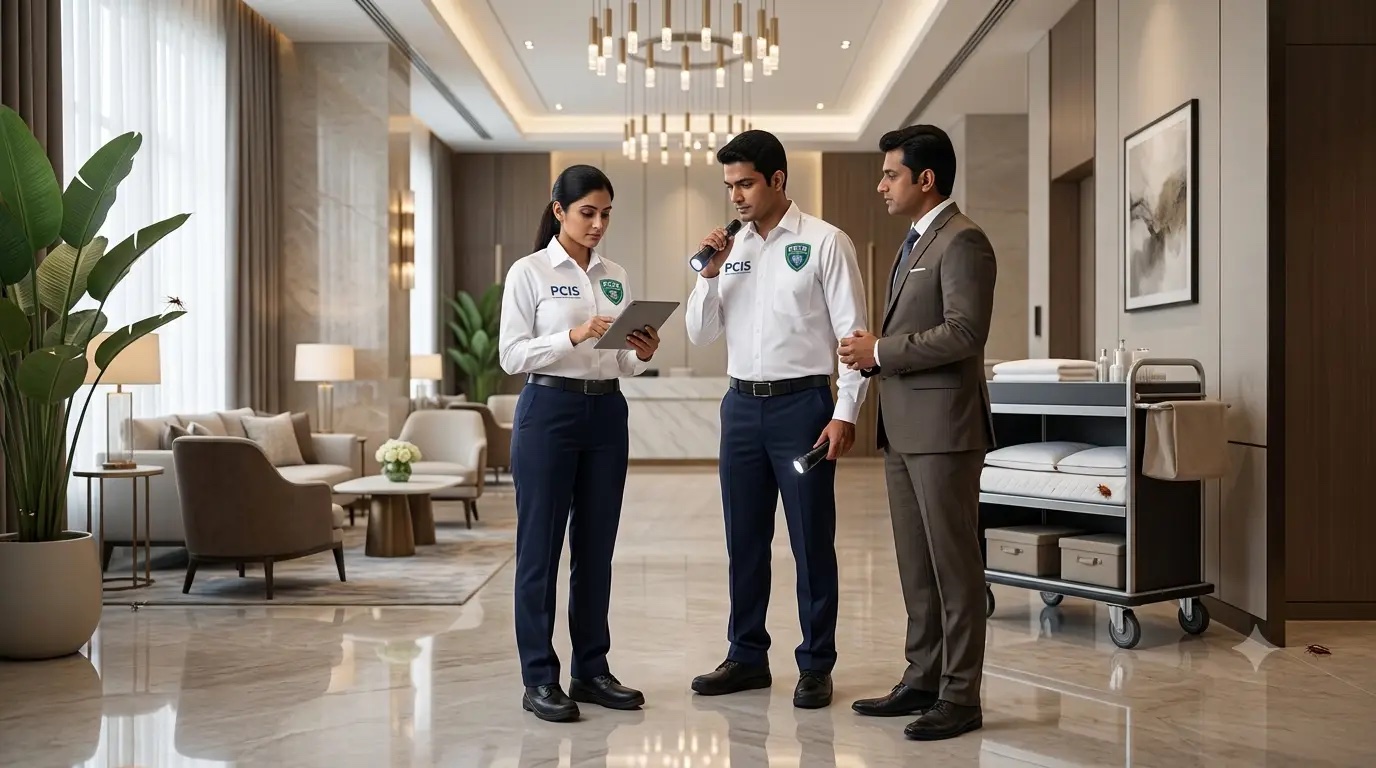
A single pest sighting during a customer or third-party audit can result in non-conformance, score reduction, or loss of certification. Prevention and documentation are non-negotiable.
Why Traditional Pest Control Isn't Enough
Conventional pest control was designed to react to problems, not prevent them. In a food environment its limitations become liabilities:
- Reactive — action is only taken after pests are already present.
- Chemical-heavy — over-reliance on pesticides is unsuitable near food.
- No monitoring — infestations go undetected until they escalate.
- No documentation — leaving you exposed at audit time.
Benefits of IPM
A structured IPM programme delivers what food manufacturers actually need:
- Preventive — stops infestations before they start.
- Monitoring — early detection through devices and inspections.
- Documentation — complete, audit-ready records.
- Compliance — supports HACCP, GMP, ISO 22000, FSSAI and BRCGS.
- Trend analysis — data that reveals and pre-empts emerging risks.
Treat pest management as part of your food safety management system — not a facilities afterthought. Integrate it with your HACCP plan and internal audit schedule.
How PCIS Implements IPM
Our food-sector specialists deliver a closed-loop programme tailored to your process flow and compliance obligations:
- Inspection — detailed survey of activity, entry points and conducive conditions.
- Risk assessment — zone-by-zone grading aligned to product sensitivity.
- Monitoring — bait stations, insect light traps and pheromone devices.
- Proofing — exclusion and structural recommendations to deny entry.
- Treatment — targeted, food-safe interventions only where needed.
- Documentation — audit-ready records of every visit and action.
- Review — trend analysis and continuous improvement.
Explore our industry-specific programme for Food Processing facilities to see how the strategy maps to each production zone.
Final Thoughts
In food processing, pest management is not just about eliminating pests — it is about protecting product integrity, safeguarding your certifications and maintaining the trust of customers and regulators. A structured Integrated Pest Management programme is the most reliable way to achieve all three, consistently and defensibly.
If you operate a food processing or manufacturing facility, partnering with an experienced IPM provider is one of the highest-return investments you can make in compliance and business continuity.