
Integrated Pest Programme
Building Sustainable Pest Prevention Through Partnership
An Integrated Pest Programme (IPP) is a structured pest management system focused on prevention, monitoring, documentation and continuous improvement rather than simply eliminating pests after an infestation occurs. At PEST CARE INDIA SOLUTIONS, our programmes are developed around internationally accepted Integrated Pest Management (IPM) principles and customized to each client's facility, industry, operational risks and compliance requirements.
What is an Integrated Pest Programme?
Unlike conventional pest control, an Integrated Pest Programme is a long-term partnership between the client and the pest management provider. Rather than reacting to pest sightings, an IPP identifies and eliminates the root causes that allow pests to survive.
The objective of an IPP is to:
- Prevent infestations
- Protect people
- Protect products
- Protect infrastructure
- Maintain hygiene
- Support regulatory compliance
- Minimize pesticide usage
- Improve operational efficiency
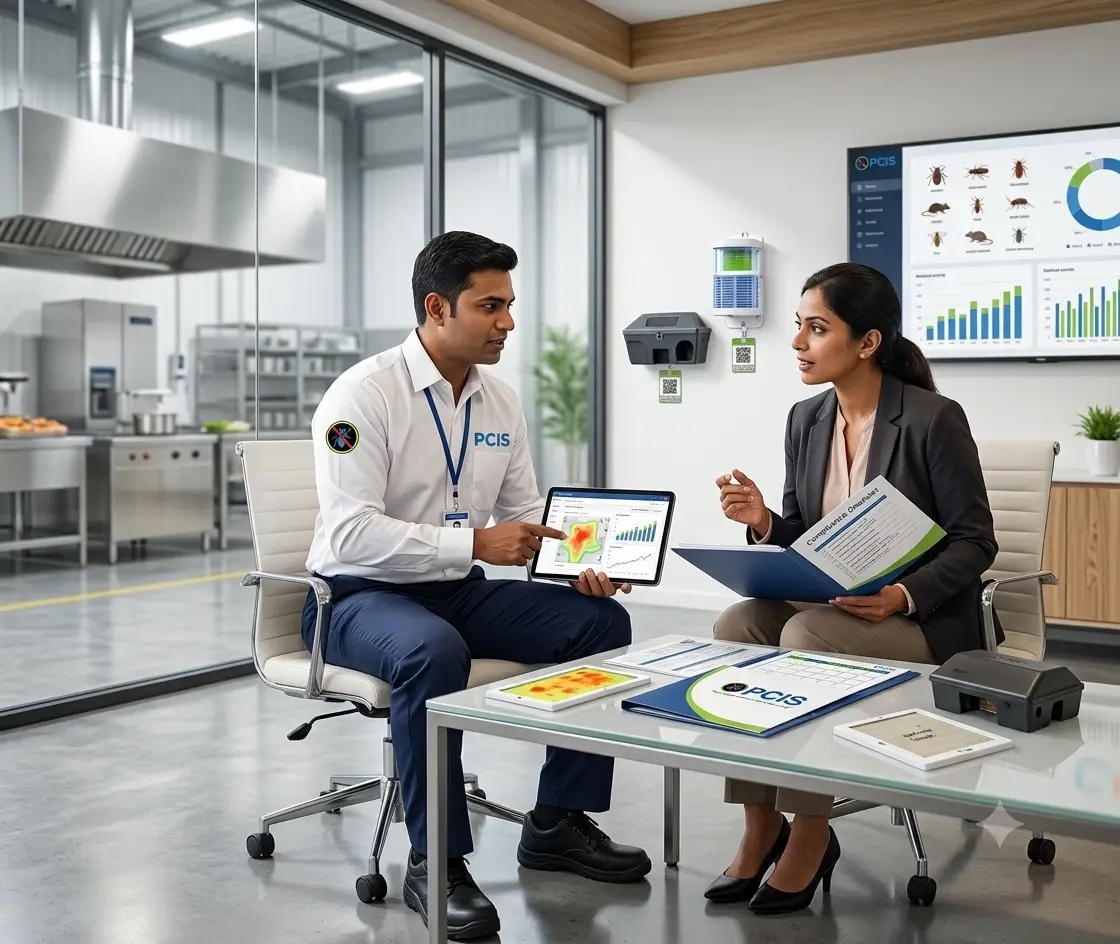
Why Every Business Needs an IPP
A structured programme protects far more than your premises — it protects your entire operation.
The Continuous Improvement Cycle
An IPP is never "finished" — it is a self-reinforcing loop that gets stronger over time.
Prevent
Exclusion and habitat control stop pests before they enter.
Monitor
Devices and inspections detect activity at the earliest stage.
Analyze
Trend data reveals hotspots, patterns and emerging risks.
Control
Targeted, responsible treatment only where necessary.
Improve
Findings refine the programme, then the cycle begins again.
Prevent → Monitor → Analyze → Control → Improve → and prevent again.
A True Client & PCIS Partnership
Preventive measures by the client and curative expertise from PCIS work together to keep your facility pest-free.
Customer Responsibilities
Preventive Pest ManagementOmission & Restriction
- Deny pest entry
- Seal structural gaps
- Install proofing systems
- Maintain building integrity
Sanitation
- Daily cleaning
- Waste segregation
- Drain maintenance
- Spill management
- Cleaning schedules
Access Denial
- Closed doors
- Air curtains
- Strip curtains
- Dock management
- Door sweeps
Habitat Modification
- Vegetation management
- Moisture control
- Scrap removal
- Storage improvements
- Lighting management
PCIS Responsibilities
Curative Pest ManagementInspection
- Comprehensive facility inspections
Identification
- Correct identification of pest species
Monitoring
- Monitoring devices
- Trend analysis
- Risk assessment
Recommendations
- Corrective actions
- Structural improvements
- Proofing
- Sanitation improvements
Treatment
- Species-specific treatments
- Mechanical & physical methods
- Chemical (only when necessary)
- Biological approaches
Documentation
- Inspection & service reports
- Pest trend analysis
- Corrective actions & recommendations
- Audit documents
Standard IPP Coverage
A single integrated programme covers the full range of pests and microbial risks — each with a dedicated PCIS service.
The IPP Workflow
A clear, repeatable methodology from first survey through continuous improvement.
Site Survey
Detailed walkthrough of the facility and surroundings.
Risk Assessment
Grade each zone by pest pressure and product sensitivity.
Facility Mapping
Map devices, zones and hotspots on a site plan.
Device Installation
Install monitoring devices at optimal locations.
Trend Analysis
Track catch counts and activity over time.
Preventive Recommendations
Advise on proofing, sanitation and habitat control.
Targeted Treatment
Apply responsible treatment only where required.
Documentation
Record every finding, action and recommendation.
Review Meeting
Periodic review of performance and open actions.
Continuous Improvement
Refine the programme and repeat the cycle.
Monitoring Systems We Deploy
Continuous monitoring is the backbone of a preventive programme, turning pest management from reactive to proactive.
- Glue boards
- Rodent bait & monitoring stations
- Fly monitoring
- UV fly killers
- Pheromone traps
- Insect light traps (ILTs)
- Digital monitoring
- Site maps & device registers
- Trend analysis
- Defined monitoring frequency
A Complete, Audit-Ready File
Every IPP maintains structured documentation that stands up to internal, customer and third-party audits.
Supporting Your Standards & Audits
A well-run IPP directly supports the pest management requirements of leading quality and food safety systems.
Our documentation and trend data are structured to support both internal audits and customer audits, giving your quality and compliance teams complete confidence.
Benefits of a Structured IPP
A disciplined programme delivers measurable, long-term value across your operation.
- Reduced pest activity
- Lower chemical usage
- Improved hygiene
- Regulatory compliance
- Reduced product loss
- Lower operational risk
- Safer workplace
- Long-term cost savings
- Environmental responsibility
- Stronger business reputation
- Audit confidence
- Continuous improvement
A Programme Partner, Not a One-Time Sprayer
See how a structured PCIS Integrated Pest Programme compares with conventional pest control.
- Industry-specific IPP
- Scientific inspection & identification
- Trend analysis & digital documentation
- Regulatory & audit support
- IPM specialists & customized programmes
- Preventive focus with emergency response
- Reactive spraying
- Limited documentation
- Generic, one-size-fits-all treatment
- No trend analysis
- No preventive planning
- No audit or compliance support
Integrated Pest Programme FAQs
Build a Smarter Pest Management Programme
A successful IPP is built on collaboration, prevention and continuous improvement. Partner with PEST CARE INDIA SOLUTIONS to implement a science-driven programme that protects your people, products, facilities and reputation while supporting regulatory compliance.